Practical guide · October 2026
Family Stays in Avignon: 6 Practical Tips
Start with one simple idea: you do not need to “do” all of Avignon
Family travel has a funny habit of turning good intentions into a military timetable. You arrive with a list of monuments, markets, views, restaurants and day trips; by lunchtime, somebody needs a snack, somebody needs the loo and somebody has decided the pigeons are more interesting than medieval history. Honestly, that is not the day going wrong. That is the day becoming a family holiday.
Avignon is a very good place to loosen your grip on the schedule. Its historic centre gives you plenty to look at without requiring a huge trek between every stop: old streets, city walls, squares, cafés, little details in doorways and plenty of reasons to pause. The trick is not finding more things to add. It is choosing fewer things and making them feel easy.
If you are coming with toddlers, school-age children or teenagers, these six tips will help you build a stay that has enough structure to feel satisfying and enough slack to stay pleasant. Think of them as a practical framework, not a rulebook.
1. Choose a base that supports your real rhythm
The most useful accommodation decision is rarely about finding the fanciest-looking option. It is about reducing friction. With a family, every extra transfer can become a negotiation over bags, hunger, tired legs and the urgent need to find a bathroom right now. A base in or close to the historic centre makes it easier to pop back during the day, reset, and head out again when everyone is ready.
For an intra-muros stay, the Quartier des Teinturiers is one central area to consider. Damien and Lubna host two apartments there: Lavande Évasion, with one bedroom, and Lavande Dorée, with two bedrooms. Always check the current listing details and whether the setup fits your own group before booking; every family has different needs.
Staying centrally also changes the emotional temperature of the trip. You are not committed to an all-day expedition simply because getting back feels complicated. A child can rest, an adult can take a breather, and you can return later for a short evening walk when the light and energy are different.
When comparing places, ask practical questions rather than romantic ones. How will arrival work with your luggage? Will you be able to take a mid-afternoon pause if needed? Is the location somewhere you will feel comfortable returning to after dinner? Those answers tend to matter more than a long list of theoretical possibilities.
2. Plan one anchor activity per half-day
The quickest way to make Avignon feel exhausting is to stack three “must-sees” before lunch. The better approach is to pick one anchor: a major sight, a garden, a market visit or a slow walk with a destination. Then allow the rest of the half-day to happen around it.
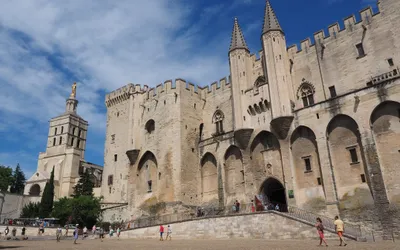
For example, you might make the Palais des Papes your morning focus, then leave time afterwards for a drink, a simple lunch and some wandering. If you are deciding whether it suits your family’s interests, our Palais des Papes guide can help you set expectations before you go. Not every child will be fascinated by every room, and that is fine. Give them a small mission instead: spot a gargoyle, choose a favourite detail, count arches or find the best view.
In the afternoon, choose something deliberately lighter. A garden, a square where you can sit for a while, or a stroll along the walls may be exactly enough. The point is to make space for the city itself. Avignon is more enjoyable when children have time to notice things rather than being marched from one historic fact to the next.
This approach also makes bad weather or low energy less dramatic. If one planned item falls through, your day is not ruined; you still have a shape to it. And if everybody is unexpectedly full of beans, you can add a little more without having to rearrange the whole plan.
3. Use food breaks as part of the itinerary
No family travel advice is glamorous here: hungry children do not care that you are standing in a beautiful medieval city. Plan for food before it becomes a problem. Keep water and a small snack with you, notice places that could work for a pause, and avoid making lunch a reward that only happens after another hour of sightseeing.
Avignon makes this easier because a food stop can also be part of the experience. Browsing a market, choosing fruit, watching daily life in a square or sitting down for something simple can be just as memorable as ticking off another landmark. It gives everyone a chance to recalibrate, and it lets adults enjoy the trip too.
Try not to over-engineer every meal. You may have a restaurant in mind, then discover that the timing is wrong, the children are tired or the appealing little place you passed earlier is the better choice. Flexibility usually wins. If eating out with children feels stressful, go early, keep the plan modest and save the long, grown-up meal for another trip.
This is also where a central base earns its keep. Being able to return for a pause can take pressure off the day. You do not need to carry the entire family operation around the city from breakfast to bedtime.
4. Mix big history with small wins
Avignon has serious history, but children do not need a lecture to connect with it. They often respond first to scale, stories and odd details: enormous walls, towers, bridges, stone faces, narrow lanes and the feeling that the city has been here for a very long time.
Balance a headline sight with something small and immediate. After a major visit, follow it with an ice cream, a game of “find the oldest-looking doorway”, a few minutes people-watching or a stop in a garden. These little wins are not filler. They are what help a child remember the day as fun rather than as a sequence of instructions.
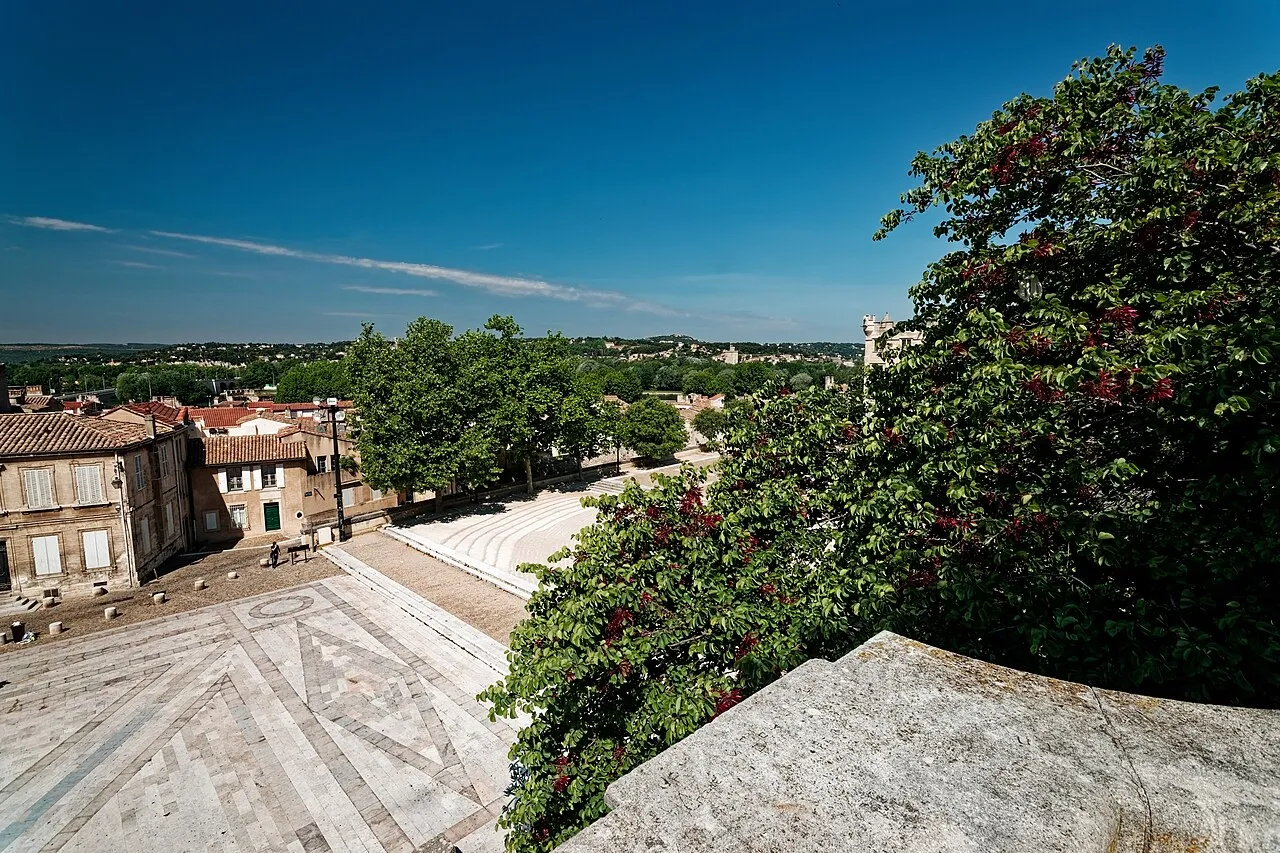
The Jardin des Doms can be a useful change of pace when you want greenery and a pause from busy streets. It is worth checking current opening information before you go, but our Jardin des Doms overview explains why it often fits neatly into a family day. Treat it as a place to slow down, not another attraction to race through.
Teenagers may enjoy being given a little agency: choose the next street, take photos around a theme, pick one local food to try, or decide which viewpoint is worth the climb. Younger children might prefer a scavenger hunt made up on the spot. None of this needs special equipment. It just shifts the day from being something done to them into something they are helping to shape.
5. Build in a reset every day
A holiday day does not have to be continuous. In fact, a reset is often the difference between a lovely evening and a total meltdown. Aim for a gap in the middle of the day, especially in warmer weather or after a busy morning. It can be a proper return to your accommodation, a quiet drink, a slow lunch or simply twenty minutes with no agenda.
Adults often resist this because there is so much to see. But children are not the only ones who benefit. A pause gives everybody a chance to drop the map, stop making decisions and come back out with more patience. You are far more likely to enjoy a spontaneous detour when nobody is running on fumes.
This is particularly useful if you are visiting during a lively period, when streets and public spaces can feel busier than expected. Instead of trying to beat the crowds all day, do one thing early, rest, then go out again later with a shorter, simpler plan.
A reset also gives you permission to change course. Perhaps the family loved a particular square and wants to go back. Perhaps a museum day suddenly feels too ambitious. Perhaps rain means you need to rethink everything. None of that is failure. It is exactly why you leave room in the itinerary.
6. Leave one day, or one afternoon, deliberately open
The best family itineraries include an escape hatch. If you have three days in Avignon, do not fill all three to the brim before you arrive. Keep at least one afternoon open for the thing you could not have predicted: returning to a favourite spot, browsing a market, taking a longer break, or choosing a nearby outing based on the weather and everyone’s mood.
If you want a ready-made structure without overloading your plan, see three days in Avignon. Use it as a menu, not an exam. Pick what genuinely appeals to your family and ignore the rest without guilt.
An open slot is also useful if you are considering a day beyond the city. Provence offers plenty of tempting possibilities, but a long excursion is only worthwhile if it suits your group that day. There is no prize for maximising kilometres. Sometimes the better choice is another relaxed walk inside Avignon, followed by an early dinner and an unhurried evening.
Before you leave, write down only a few non-negotiables: where you are staying, your arrival plan, one or two bookings that require a time, and a shortlist of flexible ideas. Everything else can be decided once you can see the weather, the pace of the streets and your family’s energy.
A family stay in Avignon works best when it feels less like a production and more like shared time in a remarkable place. Choose a practical base, set gentle priorities and let the city provide the rest. When you are ready to turn that loose plan into dates, you can check availability through the booking page.
Frequently asked questions
Is Avignon a good destination for a family city break? +
Yes. Avignon is compact enough for short family outings, full of visual landmarks and easy to enjoy without turning every hour into a museum visit. A relaxed rhythm makes the city especially rewarding with children.
How many days should a family spend in Avignon? +
Three days is a comfortable starting point: one day for the historic centre, one for a major sight and a slower outing, then one flexible day for gardens, markets, a favourite place or a nearby excursion. Two days can work if you keep expectations simple.
Where should families stay in Avignon? +
A central location can make family travel easier because you can return between outings, avoid unnecessary transfers and keep meals flexible. Check the exact accommodation details before booking, especially if your group has specific needs.
Should we book every activity before arriving? +
Book only the things that genuinely need a timed entry, then leave open space around them. Weather, energy levels and unexpected discoveries often shape the best family moments in Avignon.
What is the easiest way to plan meals with children in Avignon? +
Think ahead about meal timing, carry water and snacks, and avoid scheduling a major visit when everyone is likely to be hungry. A simple lunch and an unhurried evening usually work better than chasing a perfect restaurant plan.
Ready to come?
Stay 5 min from Avignon's historic centre
Two 3-star charm apartments, 2 min from rue des Teinturiers and 18 min from the Palais des Papes. Direct booking, no middlemen.